4/ January
The mechanical seal industry’s development direction for the 15th Five-Year Plan period has been clarified, and an industry event was held in Xiamen.
The mechanical seal industry’s development direction for the 15th Five-Year Plan period has been clarified, and an industry event was held in Xiamen.
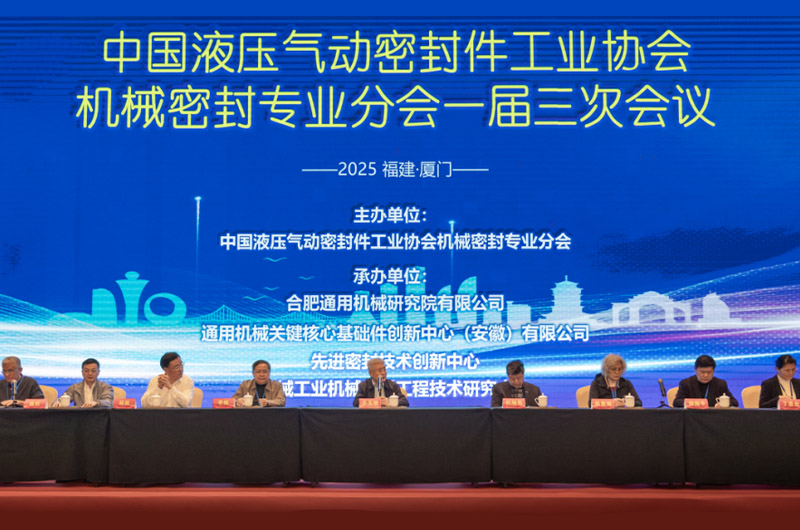
On December 19, 2025, the Third Meeting of the First Session of the Mechanical Seals Professional Branch of the China Hydraulic Pneumatic Seals Industry Association was held in Xiamen, Fujian Province. The meeting, themed “Anchoring Goals for Development, Striving Forward to Open a New Chapter,” outlined the blueprint for the industry’s “15th Five-Year Plan.”
Academician Wang Yuming of the Chinese Academy of Engineering, Chairman Du Xudong of the Association, and Branch President Li Kun, along with other industry leaders and experts, attended the meeting. Chairman Wang Liming of Kunshan Xinyoumi Mechanical Seals Technology Co., Ltd. was also invited to participate. Chairman Du Xudong highly praised the branch’s achievements, recognizing its role in building consensus and contributing to the high-quality development of the industry.
The meeting was chaired by Wu Zhaoshan, Secretary-General of the branch. Li Xiang, Deputy Secretary-General, summarized the industry’s work in 2025, clarifying key tasks such as tackling core technology challenges and the domestic substitution of high-end products. President Li Kun released a report on the development direction for the 15th Five-Year Plan, proposing a development theme of “high-end, intelligent, green, and international.” Secretary-General Wu Zhaoshan interpreted the guiding role of standards and publicized the newly released standards for 2025.
In addition, three industry experts shared their cutting-edge insights on high-end equipment sealing technology, high-quality graphite materials, and silicon carbide ceramic sealing materials.
The conference attracted more than 320 representatives from over 240 organizations, building industry consensus and injecting new momentum into the high-quality development of the mechanical seal industry.
Learn More